Frank Scales
November 11, 2024
The fairness of our justice system, although not without its shortcomings, is what separates the United States and western culture from the instability that often characterizes other countries. Barack Obama said it best in his address at the Democratic National Convention in 2004 when he said that the “true genius of America” is that we can “say what we think, write what we think without hearing a sudden knock on the door.”
The belief that life, liberty, and property cannot be deprived from an individual without due process of the law was inscribed by our founding fathers in the United States constitution and has been upheld by the United States Supreme Court for close to 250 years. Thanks to many patriots during the civil rights era, due process finally protects all of us.
Unfortunately, some of us, through ignorance or corruption, fail to realize the power of what we have inherited. Our rights which are meant to be protected by our justice system were not given but fought for.
The Supreme Court has ruled that all students at public colleges are entitled to these same rights. In conduct cases, students are entitled to due process which minimally includes a notice of charges, an opportunity to refute said charges, and a chance to sit in front of a judicial committee where they shall judge the merits of the case. The rationale behind this is that progress towards a degree shall be considered a student’s property. Therefore, expelling a student equates to depriving said student of their property.
After my personal experience and subsequent research, I wish I could report that colleges and universities uphold a high standard of justice in college disciplinary proceedings. I wish I could, with certainty, say that a student charged with a conduct infraction will always be given notice of said charges. I wish I could say that a college will give the accused student the evidence behind the allegations they are being accused of. I wish I could say the members of the Judicial Committees that judge conduct cases are unbiased enough to make the prudent decision. I wish I could say that when a student is found responsible for an infraction against the code of conduct, they are indeed provided with a rationale behind the decision. I wish I could say the college keeps a certified record of all meetings and proceedings that take place regarding a student’s conduct case. Sadly, all I can confidently proclaim is that your rights will not be upheld unless you know what they are, and exactly how to exercise them.
College administrations across the United States have not only hollowed out the due process rights guaranteed by the United States Supreme Court, the highest court in the land, but have gone a step further. Many colleges’ codes of conduct are riddled with ambiguities which enable these colleges to bring allegations against any student. To add icing and rainbow sprinkles on this very corrupt chocolate cake, colleges do all of this while posturing themselves as the staunchest social justice warriors of our time.
College administrations have done everything in their power to weaken these protections by taking advantage of students’ naivety and lack of knowledge and legal expertise. Colleges have justified their actions by arguing that due to the educational purpose of these conduct cases, expansive due process rights are not warranted. In other words, ‘shut up and learn your lesson dumb student.’ This stance ignores the devastating impact these cases have on students’ lives. A suspension or expulsion from a college can severely limit a student’s job prospects and even serve to blacklist students from other colleges and universities.
Some may wonder why a college administration like the marvelous and very competent administration at Community College of Philadelphia would limit students due process rights considering the serious nature of these cases. The obvious answer is leverage. CCP’s administration feels they must maintain absolute control over the judicial process so they can charge any student with a conduct infraction and have it work out in their favor. The administration enacts ambiguous rules and then levies these rules against students they deem a threat to their power.
These ambiguous rules can be applied to almost any student at the college. For example, two ambiguous rules that could be used at the behest of our very own beloved president Dr. Generals are “Physical/Verbal Abuse” and “Threatening Behavior/Harassment/Bullying.”
Some will say this analysis is unfair. They reason that the administration would not engage in such corrupt activities. More seasoned members of the CCP community would respond by saying that they have not known the administration for long enough. Another, albeit more valid, point is that those rules are not ambiguous. They may add that all those words have precise definitions. To an extent I would agree. “Physical/Verbal Abuse” and “Threatening Behavior/Harassment/Bullying” are all distinguishable behaviors. The issue arises when the administration either does not define those words in the Code of Conduct or makes their own definitions up for those words.
You may be thinking that some of the things I am saying are oddly specific. Your hunch is correct. CCP has been investigating me for the past 4 months. The administration has failed to respect my due process rights at every turn. To encapsulate my experience, I was left with no choice but to spend 3,000 dollars on legal representation just to get the administration to do something as simple as give me copies of the evidence they planned to use against me.
On July 23rd, the Community College of Philadelphia opened an investigation against me for two charges, “Physical/Verbal Abuse” and “Threatening Behavior/Harassment/Bullying.” Some may be wondering: ‘What did he do?’ I wish I could tell you. In my judicial hearing I asked the complainant that same question. The only response I was given was that “there were too many incidences to cite.”
After receiving notice that I was under investigation, I immediately asked the Conduct Coordinator, Juanita Henry, and Dean of Students, Brad Koveleski, to please provide the evidence. Both administrators failed to provide copies of the evidence. In response to my request, Dr. Kovaleski actually texted me. He explained that Mrs. Henry would go over that information in my meeting with her. Being naive and eager to clear up confusion. I scheduled a meeting with Mrs. Henry. Before this meeting even took place, the complainant and her friends decided to publish multiple messages on Discord where they stated I was under investigation and encouraged other students to report me. In response, I immediately posted a letter on my personal Instagram explaining the situation.
Walking into the meeting with Mrs. Henry, which the administration forced me to schedule, I was expecting to be given the evidence and all other information about the case. Instead, an interrogation ensued. Mrs. Henry did not provide me with copies of all the evidence, instead she continued the meeting by questioning me on whether I was racist or not. Mrs. Henry argued that if someone felt offended, that automatically meant that I was responsible for bullying regardless of what events transpired. Mrs. Henry threatened to personally sue me for the letter I posted on my social media which shed light on the case. However, when I mentioned the fact that the complainant and her friends were telling people I was under investigation and motivating students to report me, Mrs. Henry shrugged it off like that was perfectly acceptable behavior. This is despite the fact that the code of conduct specifically stipulates that conduct cases ought to remain confidential and only the parties involved ought to know about the case. I would quote the code of conduct here.
I left this meeting questioning my own sanity. I certainly felt as if the entire world was against me. Later I returned to my resolve and realized that Mrs. Henry treated me as if I was guilty in the mandatory conduct meeting. This meeting confirmed my suspicion that I was being persecuted for my advocacy and that I needed the help of a lawyer. I got hold of a lawyer from Jefferson University who wrote the school a long email which asked the college to hand over all the evidence. Days after this email was sent, Mrs. Henry finally sent copies of all the evidence which consisted of two Power Point slideshows, two anonymous reports, and a report made by the complainant and her close friend.
After reviewing the evidence, I understood why the college was withholding it. Mrs. Henry withheld the evidence because the case was ridiculous. The slideshow was filled with nonsense. I was incredulous after finding out that while I spent my summer working to reform student government to better the college, the complainant and her “friends” planned a bone headed coup by initiating a conduct investigation in bad faith. She had no time for SGA meetings, yet she had time to create a 42-page slideshow slandering my character. The purpose of the Power Point slideshow that “various contributors” wrote was to compile “The various reasons a multitude of students are dissatisfied with Frank’s presidency.” It proposed “Frank’s abdication or removal from the role of SGA President as soon as possible.” The college was simply taking advantage of an opportunity to unperson me.
With the trial approaching I reached out to FIRE, “The Foundation of Individual Rights and Expression.” They took an interest in my case and proceeded to write a letter on my behalf and send it to CCP’s president, Dr. Generals, and all other prominent members of the school administration including Mrs. Henry. They argued that even putting me through the judicial process for such frivolous allegations was a punishment in and of itself.
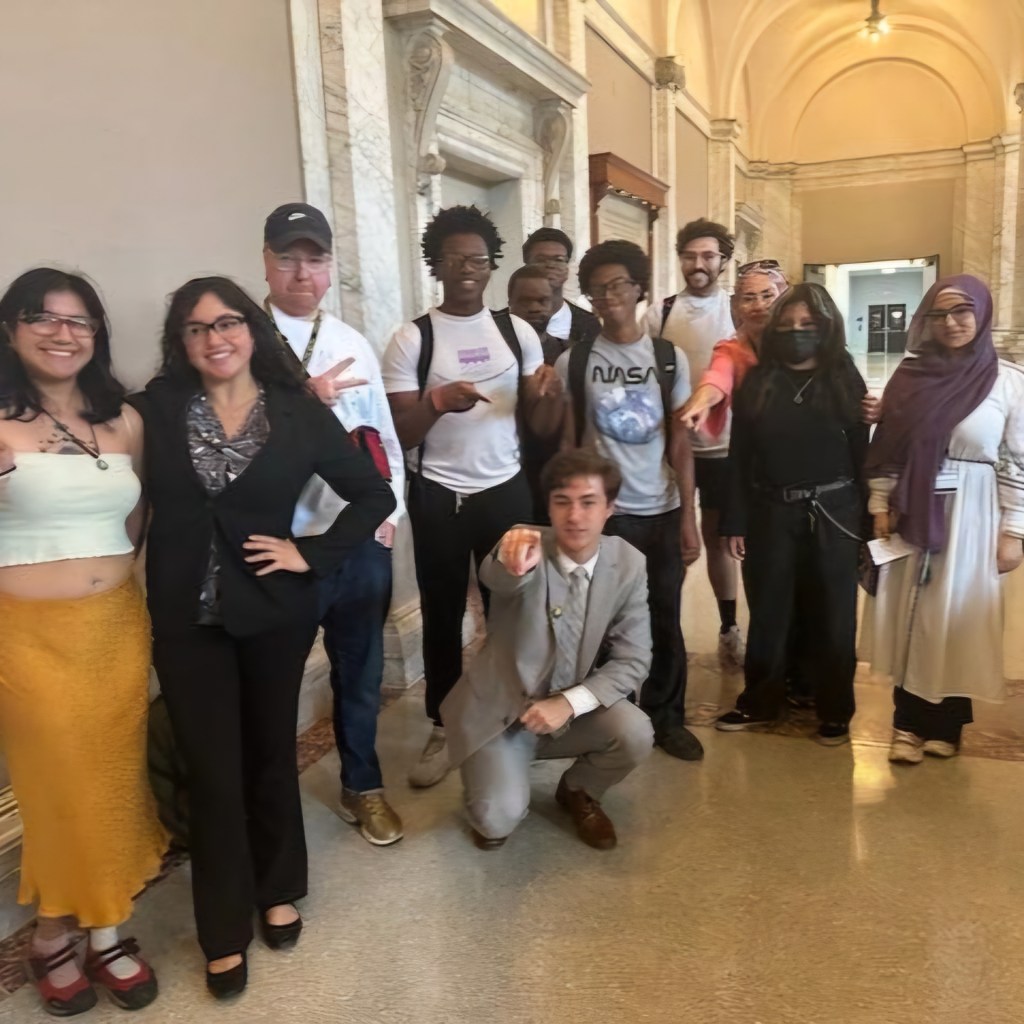
On the day of the judicial hearing, over twenty students showed up and showed out, not only to support me, but to testify on my behalf. Each witness refuted the unfounded allegations. The complainant had no witnesses and at one point even read what one of her friends wrote. Yes, this can be characterized as hearsay. The chairperson of the hearing did not point this out and allowed her to continue. In the trial, I asked a remarkably simple question: “can you name an incident where I harassed or bullied you?” After several minutes of shuffling through papers, she answered saying that there were “too many incidences to cite”. The fact that she could not name a single incident is incomprehensible.
The judicial hearing started seven minutes late; in the hearing I explained that I thought this situation was unfortunate and that I was looking forward to working with everyone in the room for the good of the student body. Only five out of twenty of my witnesses were allowed to speak. Paulina Reyes, my last witness, even got her testimony cut short to thirty seconds. I was allowed to cross examine the complainant with only two questions. The administrative and faculty chairpersons were very disrespectful to me and my witnesses. For example, they rolled their eyes numerous times and became aggressive in their tone. In my opinion, there was a clear bias throughout the trial.
I left the judicial hearing knowing that it was a rigged trial and that the administration was attempting to assassinate my character. However, I remained hopeful because the complainant failed to provide an incidence where I harassed or bullied her. The Second Vice President of the Student Government, Jaritsa Hernandez-Orsini even informed the Judicial Committee that the complainant had mocked me in the past, going as far as to call me illiterate in iMessage group chats. Paulina Reyes, the previous editor in chief of the Vanguard student newspaper, went on to explain that I was a pleasure to work with and that I have never been rude or disrespectful. Additionally, a member of the queer student union told the judicial committee that I did not pop balloons or eat too much food at the queer prom. Yes, you read that right. The complainant was accusing me of eating too much food at the queer prom.
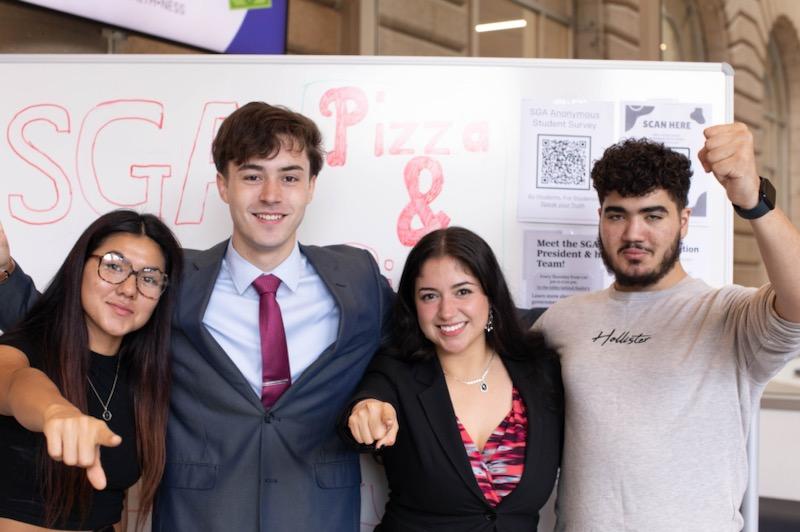
The judicial committee told me that they would render their decision within “72 hours.” “72 hours” turned into 2 weeks. On September 26th, I received the findings of the judicial committee. After opening the letter, my girlfriend and I were shocked that I was found responsible.
Both Mrs. Henry and the Judicial Committee failed to explain what I did, and did not provide any rationale behind their decision. Additionally, Mrs. Henry also initially neglected to provide me with the contact information of Appeal Advisors, which the code of conduct mandates the school provides.
Despite not having access to an Appeals Advisor, I made my appeal. The day of the appeals hearing, I once again showed up with twenty students who were all ready to testify on my behalf. The chairperson of the appeals committee stumbled as he tried to answer basic questions. One being why I was “not given a rationale for the judicial committee’s decision” or an explanation as to why it took so long for the conduct coordinator to provide me with the evidence. Then, the chairperson became irate, aggressive, and started demanding I answer questions that were unrelated to my appeal.
I thought this was over until Mrs. Henry sent a letter to an editor of The Independent newspaper. The letter alleges that he broke the same rules that I was alleged to have broken. I am determined to ensure all students’ due process rights are respected and that the school stops persecuting student advocates. God only knows how long they have been doing this. For those reasons I will be advising him through his case.
I urge any student facing conduct cases to also reach out to me. Students’ rights will be upheld under my presidency.


Leave a Reply