
Max P. Hassel
March 4, 2025
The college’s refusal to meet faculty and classified staff bargaining demands has forced the Federation to prepare for a potential strike in March, which could threaten classes, student support services, and graduation to secure long-term improvements for the college.
For too long, students at CCP have been treated as passive consumers rather than active participants in shaping their own education. So, as students, what is to be done?
History shows that student activism can lead to tangible change. In 1970, CCP students staged a strike and sit in at the college president’s office, establishing the Student Government Association (SGA) and securing student representation on standing committees.
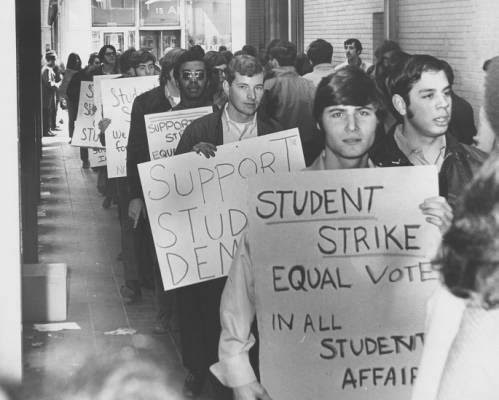
Decades later, members of SGA now serve as student liaisons to the administration. Though all of SGA’s authority derives from the Office of the President and the Board of Trustees, the most tangible work accomplished in years is bickering about who gets power.
A unionized student body would operate differently. A student union would only exist to serve students and derive power from a “grassroots movement” for student rights.
The opportunity, right now, is if students support a robust strike, the Faculty and Staff Federation could secure smaller class sizes, improved student support services, on-campus childcare, and SEPTA TransPasses.
One of the most important of the Federation’s demands is for free SEPTA TransPasses for all students and employees of the college, reducing financial strain and improving access to education. Many CCP students rely on SEPTA to commute, and rising transportation costs create a financial burden that impacts retention and academic success. This year SEPTA fares increased from $2.00 to $2.50 per ride. The costs add up quickly, especially for those commuting between Main Campus and the Northeast Regional Campus, having to take both the Broad Street line and the 88 bus. Students driving into school are often late for class because the parking lot on 17th Street fills up and closes, forcing them to find street parking.
Another important demand is for on-campus childcare. Student-parents face unique challenges in balancing academic and childcare responsibilities. CCP once provided an on-campus childcare facility in the open-air parking lot next to the Bonnell Building, where early education students could work and gain hands-on experience. The college shut down the childcare center during the pandemic and has yet to reopen it.
Many students struggle to find time with counselors or academic advisors due to limited staffing. Counseling sessions often reach full capacity, forcing students to return another day. A few more than a dozen academic advisors are responsible for serving thousands of students. Without additional investment in student support services, access to academic guidance will remain inadequate.
Adequately staffed counseling and advising offices, smaller class sizes, and improved working conditions lead to better educational outcomes. The college administration is sitting on more than $80 million in cash, investments, and receivables. Construction projects in the Winnet Building and the Center for Business and Industry continue. They have publicly posted plans for new plazas, walkways, and academic buildings online, begging the question: if there is money for these projects, why is there not money for the Federation’s common-sense demands?

Drawing by Jaritsa Hernandez-Orsini
 The Independent
Leave a comment