Paulina Reyes
February 23, 2025
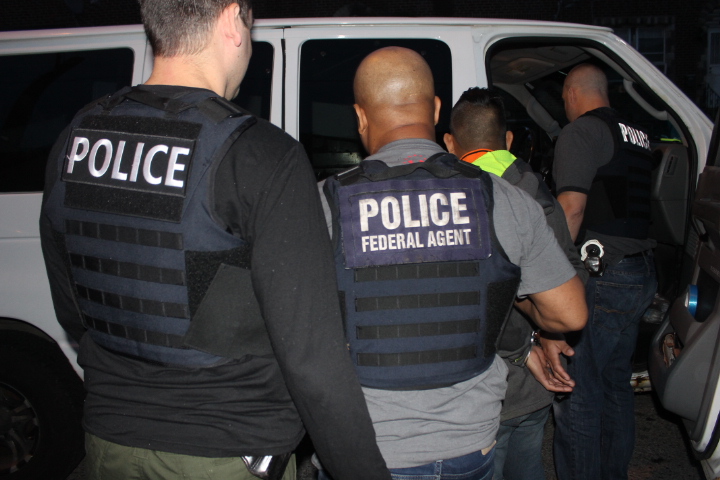
During Trump’s first run at Presidency in 2016, I was a target of passive-aggressive racism, full of “go back to your country!” jokes, or the classic “wetback dirty Mexican” insult. My entire community was a target. I was scared my father would be taken away because he was brown, undocumented and had a track record that wasn’t squeaky clean. I had family and friends and community I had to look out for as a child. My own mother was at risk too. There were children and mothers in my life where I feared if they faced Immigration Customs Enforcement (ICE) if they’d return to see me again? To this day nothing changed, there is still this fear in my heart. A loss of words of what has become of the United States. Donald Trump is not my leader; he’s not my president. I will never endorse him. My existence has often felt like a rebellion in a country that doesn’t love my people or my community but profits off our backs to make this economy run. It’s important to educate and recognize your place in the world and how your actions affect others. During this time, hold your friends close and get active in advocating and organizing. There are ways on campus for immigrant students to feel safe. Many times, the resources that exist for immigrants only help if they possess DACA status, this must change.
All undocumented students deserve to feel safe at the Community College of Philadelphia, to have food security, safe housing and support in academic endeavors. I believe access to higher education must be equitable regardless of citizenship status and economic background. You are not alone. You will never be alone. My community and I stand with you. You deserve to be successful in this country and find peace. Different proposed policies and programs have resources that advocate for a sanctuary campus. The intent of sanctuary campus is adopting policies that support and protect immigrant students from being deported. It gained traction in 2016, when Trump announced he’d end DACA and get strict with immigration enforcement. Even with a sanctuary city, it’s not enough. Here are specific policies that help and are important to investigate.
FERPA: Data use/collection and privacy protection. This policy protects students’ education records, the institution cannot give information about these records unless the student gives them permission. Thes include transcripts, family names and social security. It applies to all educational institutions that receive government funding.
Look out for warrants or subpoenas. The U.S citizenship and immigration services often have intimidating methods and aggressive tactics to forcefully coerce immigrants into cooperating with the federal immigration cops. Understanding the difference between a warrant and subpoena is a step in exercising your rights in an informed, badass way.
The fourth amendment of the constitution limits ICE power because it states everyone is free of unreasonable searches and seizures of persons or objects. Only if you have a reasonable expectation of privacy like at your home or school.
Under the Fourth Amendment, to be legally valid, an immigration subpoena must not be unreasonable. This means that immigration subpoenas, which are formal written requests for information or witness testimony, must be tailored in scope, relevant, and clear in describing what specific information is being sought, why the request is being made, and for what purpose. Thus, the Fourth Amendment functions as an important limit on both immigration enforcement power and immigration subpoena power.
Still, immigration agencies continue to test the limits of Fourth Amendment protections by seeking new ways to conduct enforcement activity and compel people to hand over sensitive information. Their most common ways of doing so are through the increased use of immigration warrants and immigration subpoenas and by inducing consent by presenting warrants or subpoenas to the people they’re targeting for enforcement.
To determine what type of document you received, first scan the document for the word “warrant” or “subpoena”; usually, the document will be titled or labeled as one or the other. Also, skim through the document to confirm whether its content matches what the document claims to be in its title. If the document seems to generally authorize the officer or agent from ICE or Customs and Border Protection office (CBP) to conduct a search or make an arrest, the document is likely a warrant. Unlike a judicial warrant, an administrative warrant does not authorize a search without consent, but does authorize an officer to make an arrest or a seizure.
If the document says that a person must appear in court at some later date to give testimony as a witness or that a person must produce or hand over certain papers, forms, materials, information, etc., then the document is likely a subpoena.
If ICE comes to your door DON’T CONSENT, don’t do it. I mean it. Be careful to review the document, demand that they shove it under the door. If they have unenforceable documents, you are not required to have them search you or your home. If needed, and they persist, contact an immigration lawyer or community defense group to advise you as you interact with ICE.
You have the right to remain silent. You don’t have to speak to them. Exercise this right.
The local hotline number to help immigrants is HIAS Pennsylvania, their number is (215) 832-0900. And their number if you have asylum already is (833) 344-2772. They can help to document what is happening and follow up afterwards.
 The Independent
Leave a comment