Aaron Bechtel
August 8, 2024
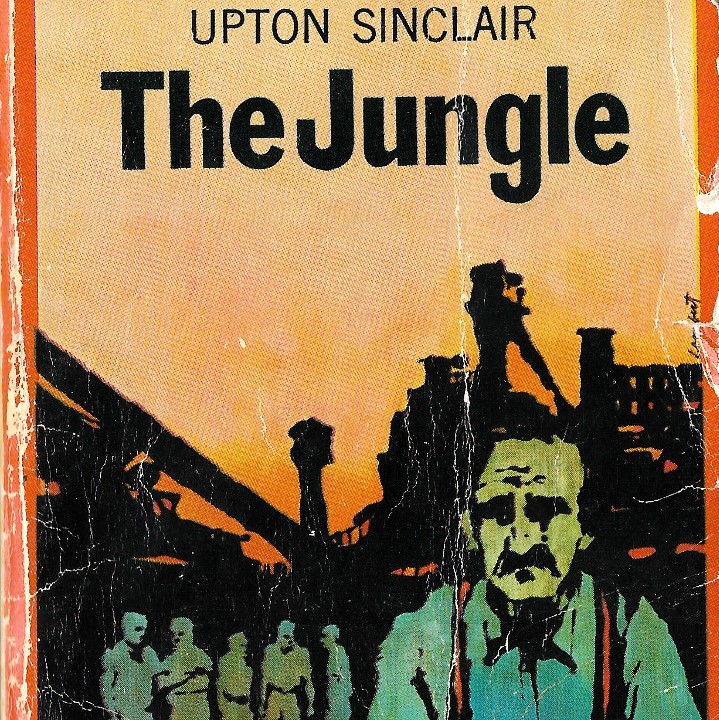
Take a journey back to the early 20th century when socialism was just a spark in the United States. Huge companies controlled the elections by paying people to vote for their candidate. The guiltiest of these companies had to be the ones based in Packingtown, a stockyard in Chicago. To try and unearth these unjust actions, novelist Upton Sinclair wrote The Jungle, a book centered around Packingtown from the point of view of an immigrant and his family.
Enter Jurgis, a healthy man who recently moved with his family from Lithuania in search of wealth. Though at first it is a promising endeavor, the family soon learns of the harsh cruelties of man. This novel was intended to move the public’s heart, and though it did for many, the book’s true message was lost in the sheer amount of unsanitary things the meat packing industry did to cut costs for more profit. In a famous quote from Upton Sinclair himself, “I aimed for the public’s heart, and instead hit them in the stomach.”
If you want to read a piece of literature that earned its place in history along with so many others, this is definitely your next read. Check it out and pick up our newspaper next week for another review.
Another Review: The Jungle
M.P. Hassel
February 7, 2025
Aaron Bechtel wrote a review of The Jungle a while back, featured in Issue 2 of Volume 1 on August 8, 2024. After reading the book myself, I am glad he recommended it so highly. However, while the novel is set in Packingtown, the “muckraking journalism” Sinclair engaged in was not primarily about the disgusting practices that led to tainted and infected meat reaching consumers. That is what stuck with the public, but his real focus was on the brutal economic hardships the packing industry inflicted on immigrants. The novel exposes the grinding exploitation, corruption, and inescapable poverty that defined working-class life in early 20th-century Chicago.
We open on an overwhelmingly joyous wedding scene, with newly arrived Lithuanian immigrants celebrating modestly, yet even this small indulgence is far beyond their means. Jurgis, young and strong, believes his physical power will sustain his family, but the relentless demands of his meatpacking job in the stockyards drain him, and he spirals in and out of the lowest, most distasteful work of Packingtown. The family struggles to find and hold livable employment, forcing even the children to work. Attempts to unionize fail. Their wages are cut, their bodies broken, and their dreams of prosperity dead as the battle to keep their home falters.
Unlike the speculative dystopias of 1984 or A Brave New World, Sinclair’s The Jungle is a reminder of what has happened, and what can happen again if history is forgotten. More than a century later, the wealth gap in America has widened to levels mostly unseen since Sinclair’s time, and workers continue to struggle under systems designed to exploit them. We have a President who openly longs for an earlier version of America that, for many, was defined by unchecked corporate power, worker exploitation, and social inequality. The Jungle is not just a book from the past; it is a warning for the present.
I suggest to all the readers of The Independent to read and digest for yourself. Develop your own relationships with these seminal works. Never inanely repeat the recapitulated rhetoric forced upon you.
 The Independent
Leave a comment